After completing the claims process for medical treatment in the US, everyone will receive an EOB statement issued by the insurance company. Most people just set it aside casually, neither checking the actual claim amount nor understanding the role of this document in the health insurance exemption review. When institutions conduct random material checks for 2nd-round Moderation, if they fail to provide compliant documentation, it will easily adversely affect the outcome of the health insurance exemption review.
Today, let's learn about what an EOB statement is and how to verify it.
I. What is an EOB Statement?
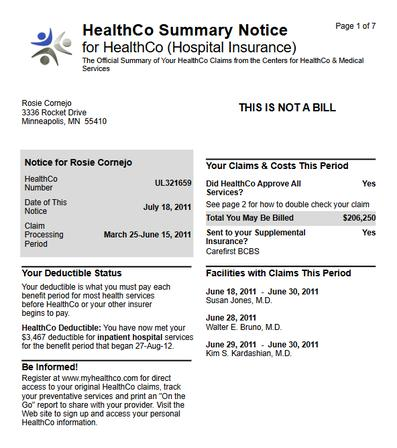
EOB (Explanation of Benefits) refers to the insurance claim statement, which is an official document issued by a US insurance company to the policyholder after the claim processing is completed, detailing the medical service costs, insurance payout status and the amount payable by the individual.
⚠️Core Misconception: An EOB (Explanation of Benefits) statement is not a hospital payment bill. It only serves to show the breakdown of cost sharing and insurance benefits, and cannot be used for direct payment.
Two Core Use Cases
- Claim Reconciliation: Verify the actual insurance payout amount to avoid issues such as incorrect billing and overcharging by hospitals
- Medical Insurance Exemption: A core document for college 2nd-round Moderation and appeal, serving as proof that the commercial insurance is authentic, valid and eligible for normal claims settlement
II. Six Core Amounts in EOB
For all claim verification and medical insurance exemption reviews, only the following fields need to be focused on:
- Provider Billed (Original Hospital Quote): The initial amount charged by a healthcare service provider, which is usually the list price before negotiation
- Allowed Amount / Member Rate (Insurance Approved Price / Member Contracted Price): The negotiated price agreed between the insurance company and in-network hospitals, which serves as the actual benchmark for claim calculation
- Insurance Paid / Plan Paid (Actual Insurance Payment Amount): The final amount paid by the insurance company, which is a key verification item for the school's health insurance waiver review
- Deductible (Annual Deductible): The amount an individual must pay out of pocket before insurance starts to share the cost. Note that the deductible is calculated on an annual cumulative basis, and the amount shown in the EOB for this single service is the amount counted towards the deductible, not the total annual amount
- Copay (Fixed Copayment) / Coinsurance (Coinsurance): A copay refers to a fixed amount paid at the time of medical consultation; coinsurance refers to the cost borne proportionally after the deductible is met
- You Owe / Your Share (Personal Payable): The out-of-pocket amount that ultimately needs to be paid to the medical service provider, which must be completely consistent with the hospital bill
III. How to Check the EOB Statement
1. Verify basic information:
Verify that the name, insurance ID, date of visit and service items on the EOB are consistent with the individual's information and the actual medical visit details
2. Lock the compensation amount:
Directly extract the value of Insurance Paid to confirm the actual insurance claim amount
3. Verify the individual out-of-pocket portion:
Check whether the calculation of the "You Owe" amount in the EOB is reasonable by referring to the policy provisions such as the deductible and coinsurance rate
4. Two-way Reconciliation:
Compare the "You Owe" amount in the EOB with the bill sent by the hospital; if there is any discrepancy, you can contact the hospital or the insurance company to file an appeal with the EOB.
5. Compliance Archiving:
Please keep the original PDF file downloaded from the official channels (official website or App) of the insurance company for random inspection by the school.
IV. The Role of EOB Statements in Medicare Exemptions
📌 Core Materials for 2nd-round Moderation:
Some universities require valid insurance policies and possible claims records (such as EOB) to be submitted along with the exemption application to verify that the insurance plan is genuinely available.
📌 Grounds for Rejecting Appeal:
If an exemption application is rejected due to "insufficient coverage" of the insurance, the EOB can serve as supplementary documentation to prove that the insurance has indeed filed claims and provided coverage in the United States.
📌 Mandatory Submission Rules:
Only official original PDFs downloaded from the official website or App of the insurance company are generally accepted, and tampered or synthesized files will lead to direct failure of the review.
V. Common Questions
Q1: Is an EOB bill required if there is no medical record?
For exemption applications at most schools, the primary requirement is to submit basic materials such as proof of insurance (e. g., insurance card, policy summary), and no EOB is needed if there are no medical records. If the school has explicit requirements, the official notification shall prevail.
Q2: How to download the official EOB bill?
Log in to the official website or App of the insurance company and go to the "Claims" page to view and download the electronic EOB; some insurance companies will send it in paper form by default.
Q3: Does a zero EOB payment affect the exemption?
Two scenarios need to be distinguished: zero compensation resulting from failing to meet the deductible (such as high-deductible plans with low Insurance premium) usually does not affect the validity of the insurance policy, but since school exemption standards vary, it is recommended to confirm in advance; if a claim is rejected due to inconsistent coverage or out-of-network services (displayed as Not Covered/Excluded), it indicates that the insurance may not meet the school's exemption requirements.
If you encounter difficulties when verifying your EOB statements or processing health insurance waivers, you can consult our advisors. We offer compliant insurance plans tailored for US institutions, with professional staff to assist you in reviewing documentation and organizing waiver materials, making it easy to handle all matters related to insurance enrollment, claims and health insurance waivers.
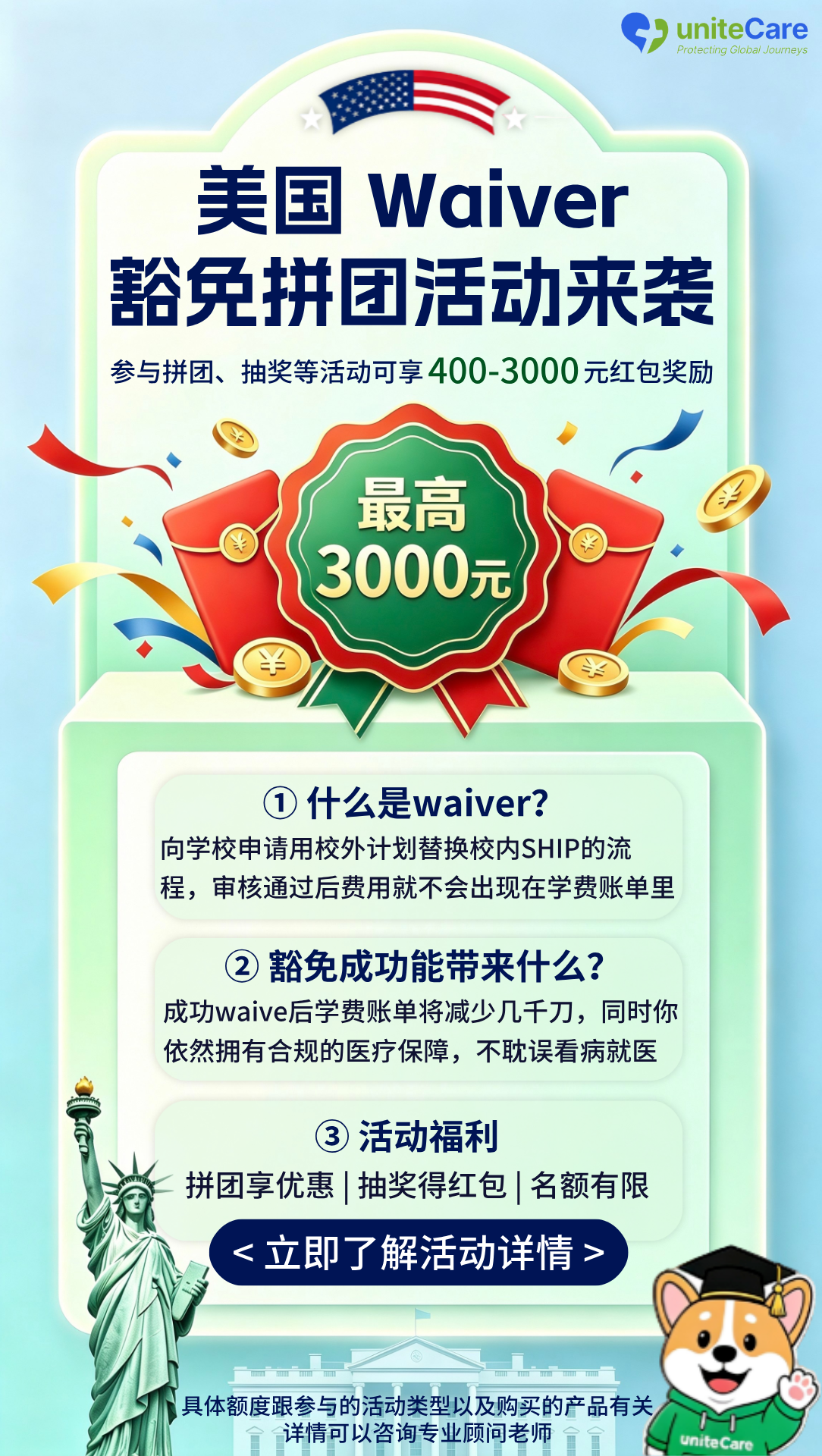
US Insurance Exemption Campaign Launched
Join group buying and lucky draws to receive up to 3000 yuan in red envelope rewards!
* [The specific quota is subject to the type of activity participated and the products purchased. For details, please consult a professional consultant. ]