Back
Avoiding Pitfalls with OSHC for Australian Dependent Visas: Always buy a Couple plan, never purchase separate Single plans!
Australia Medical Claim real stuff
2026/08/12

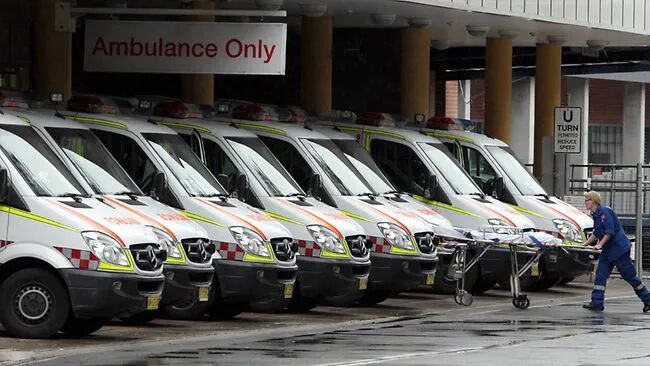
When studying in Australia, ambulance services count as a high hidden cost, with a single dispatch easily costing thousands of Australian dollars, and there are huge differences in charging standards across different states. Even though OSHC insurance can greatly help international students share the expenses related to emergency care, many students, due to a lack of understanding of the claim rules, find their claims rejected after an incident, and end up having to bear all the costs on their own.

In this article, we will break down in detail the charging benchmarks, claim settlement criteria and procedures for ambulance services in Australia, to help you avoid unnecessary large out-of-pocket expenses in the event of an accident.

I. Ambulance Fee Benchmarks for Australian States and Territories

Ambulance charging standards vary widely across Australian states, with huge price gaps, which is the core reason why many people overspend out of pocket and face claim shortfalls.

☀️Victoria VIC

🔹Emergency ground transfer: AUD 1,477 per trip in metropolitan areas, and AUD 2,179 per trip in suburban and remote areas.

🔹Non-emergency ground transfer: Stretcher trolley: AUD 399 in metropolitan areas, AUD 674 in suburban areas; clinic vehicle (only available in metropolitan areas and some remote areas): AUD 131.

🔹On-site treatment only, no transfer: A flat fee of 637 Australian dollars applies.

🔹Aerial Rescue: The variable cost for rotary-wing (helicopter) operations amounts to 13,175 AUD, with a fixed cost of 31,363 AUD; for fixed-wing (airplane) operations, the variable cost stands at 2,619 AUD and the fixed cost at 3,542 AUD. Air rescue charges exclude ground transfer services, which shall be billed separately.

☀️ NSW (New South Wales)

Simple and transparent billing method: the base call fee is 909 Australian dollars, plus a mileage fee of 8.20 Australian dollars per kilometer, with no extra surcharges regardless of holidays, making it the state with the lowest accident claim cost across Australia.

☀️Queensland QLD

🔹Emergency transfer (Code 1 and Code 2): Fixed rate of AUD 1,559.57.

🔹 Non-emergency transfer (Code 3 and Code 4): AUD 577.72 for the first 50 kilometers, and AUD 2.35 per kilometer for any distance beyond that.

🔹On-site treatment only without transfer: The minimum charge is AUD 158.39, plus an additional AUD 21.53 per kilometer of ambulance travel distance, whichever is higher.

⚠️ Pursuant to Queensland regulations, students under the age of 25 who are enrolled full-time at an educational institution in Queensland are entitled to free ambulance services on the same terms as Queensland residents. Those who do not meet these criteria are required to pay the applicable fees in accordance with the aforementioned standards.

☀️ Tasmania TAS

Ambulance services are free for local residents in Tasmania, but international students are not eligible for this benefit. The official explicitly stipulates that international students' ambulance bills must be claimed through Australia' s OSHC, with no fixed price and charges calculated based on the actual services provided.

☀️ South Australia SA / Australian Capital Territory ACT

It charges moderately, with a standard emergency call-out fee ranging from 450 to 800 Australian dollars. Any additional surcharges incurred for long-distance transfers in remote areas shall be borne by yourself.

II. OSHC Ambulance Coverage: Core Conditions for Claim Eligibility

Pursuant to the regulatory requirements of the Private Health Insurance Ombudsman (PHIO) of Australia, all compliant OSHC insurance plans (including those from Allianz, Medibank, Bupa, nib, etc.) are mandatorily required to cover emergency ambulance services, with the core rules as follows:

🔹Reimbursement ratio: 100% full reimbursement, with no deductible, no annual limit, and no restriction on the number of uses;

🔹Coverage: Includes all relevant expenses such as on-site first aid (e. g. cardiopulmonary resuscitation, hemostasis and bandaging), emergency inter-hospital transfer, and emergency medical transportation; air rescue is generally not covered by basic OSHC, and the policy terms shall be confirmed separately;

🔹Core Judgment Criteria: The "medical urgency" requirement must be met — that is, the illness or injury is life-threatening, may lead to severe complications, and requires immediate professional transfer (e. g. severe trauma, heart attack, stroke, acute appendicitis, etc.);

🔹Exceptions: Non-emergency transfers (e. g. follow-up outpatient visits during recovery, self-requested transfer to hospital for mild discomfort) and transfers for non-medical purposes (e. g. accompaniment by family members) are not covered, and the full amount shall be paid out of pocket.

3546436faf6ffeec9dfd47fd02759631.jpg

III. Claims Handling Practice: Fee Settlement and Complete Reimbursement Process

Australian Ambulance Services and Australian OSHC do not offer automatic reconciliation or automatic reimbursement, so you need to manually file a claim for all bills. The two official procedures are as follows:

Path 1: Receive the bill first, then submit for reimbursement (the mainstream approach)

1. 1 to 2 weeks after the occurrence of the accident, you will receive the electronic/paper ambulance bill;

2. Key point: Never pay in advance, and keep the bills, house call records and 000 emergency vouchers properly;

3. Log in to the APP or official website of the Australian OSHC insurance provider and access the medical claims channel;

4. Upload the complete set of materials, fill in the claim information and submit for review;

5. Wait 3-7 working days for the review and payment to be processed, and settle the ambulance bill after receiving the insurance payout.

Path 2: Pre-notification before claim occurrence (reduces the risk of claim rejection)

In case of severe injury or emergency, please call the 24-hour hotline of the Australian OSHC insurer to file a report within 24 hours. This will have the record saved in the system, which can effectively prevent subsequent claims disputes and significantly improve the approval rate.

Required Claims Documents (All Mandatory, No Exceptions)

Official ambulance invoice, visit details, emergency judgment certificate, and screenshot of 000 call record (all of the above are mandatory)

IV. OSHC Ambulance Coverage in Australia: 4 Common Misconceptions and Avoidance Guide

Misconception 1: Ambulance services in Queensland are completely free of charge

❌ Misconception: All international students can use ambulance services for free in Queensland.

✅ Fact: Only full-time international students in Queensland aged under 25 are eligible for free access. Students who are over the age limit or enrolled part-time do not qualify for this benefit and must seek reimbursement via OSHC.

Misunderstanding 2: Severe symptoms automatically qualify for claim reimbursement

❌ Misconception: If one's own injury is severe, the ambulance fee should definitely be compensated.

✅ Truth: OSHC only recognizes the official emergency assessment made by emergency personnel. If the assessment states that you can seek medical treatment on your own, no expenses will be reimbursed no matter how unwell you feel.

Misunderstanding 3: OSHC provides full coverage across all scenarios

❌ Misconception: Having OSHC covers all ambulance services.

✅ Truth: Carefully check the policy terms before purchasing insurance to confirm whether emergency ambulance services are covered. If you need additional coverage (such as non-emergency transfer), you must purchase a separate rider.

Misunderstanding 4: Full reimbursement of the bill

❌ Misconception: The full amount of the bill can be reimbursed in compliance scenarios.

✅ Fact: OSHC only reimburses the basic fees at the official benchmark, while additional costs such as remote area surcharges and extra service fees shall be borne by the insured themselves.


To sum up, Australia's OSHC ambulance coverage has clear restrictions, and not all scenarios are eligible for claims. Only by clearly understanding the official rules and accurately avoiding claim pitfalls can you effectively avoid high out-of-pocket bills. If you need professional consultation on OSHC application and claim settlement in Australia, you can consult professional tutors, who will help you properly arrange your insurance coverage for studying in Australia.

oshc.png

🔥 Study in Australia Events Are Now in Full Swing

Participate in activation, group buying, and lucky draws to receive red envelopes worth up to 500-1000 yuan

*【The specific quota is subject to the type of activity participated and the product purchased. For details, please consult a professional consultant. 】

a0479474-8210-4b52-9580-521407c592de.png

More Article