During the annual U. S. admission season from July to September, many new students, after logging into their school student accounts, will find an additional health insurance fee automatically added to their bill, which is the school's default student health insurance plan. Many students will wonder: Is this fee mandatory to pay?
The answer is no. As long as your institution supports Insurance Waiver, and the off-campus health insurance you purchase on your own fully meets the policy standards set by the school, you can submit a waiver application to avoid the deduction of the on-campus health insurance fee. This is also the core reason why an increasing number of international students have abandoned the default on-campus health insurance and opted for compliant off-campus health insurance in recent years.
Today, we will combine the latest 2026 study abroad medical insurance policies to break down the differences between on-campus medical insurance and popular off-campus medical insurance, to help you figure out how to choose and how to successfully get an insurance waiver~
I. What is a Waiver
Waiver, simply put, refers to a medical insurance waiver.
The vast majority of universities in the US automatically enroll international students in on-campus health insurance and charge the corresponding fees automatically. However, schools allow students to "switch insurance independently": as long as the off-campus health insurance you purchase meets the school's coverage requirements, you can submit a Waiver application for exemption.
After the verification is approved, the school will directly cancel the on-campus medical insurance deduction in your account, so you do not need to pay the high on-campus Insurance premium, and you can use a compliant off-campus medical insurance to replace the on-campus plan, which is also a core legal way for international students to save money.
⚠️ Note: The Waiver window periods and review criteria vary across institutions, with popular study-abroad universities applying stricter reviews; you must fully comply with the relevant policies to successfully obtain a waiver.
II. On-campus Medical Insurance vs. Off-campus Medical Insurance
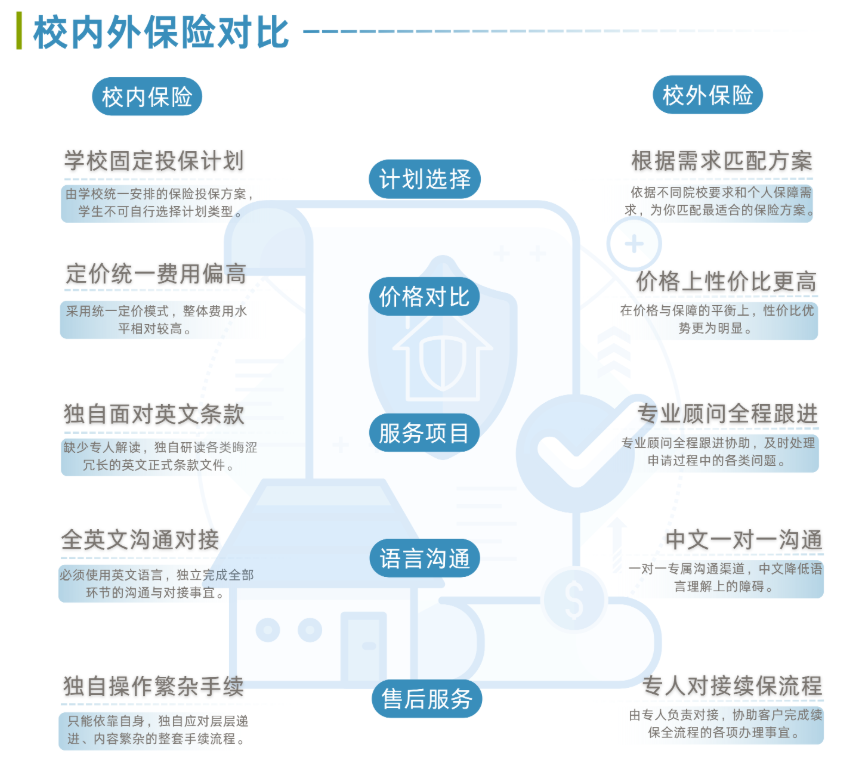
Many students believe that school insurance is definitely the best option, but this is not necessarily true. Let’s take a look at the differences between the two from several aspects that concern you the most.
It is important to emphasize that: off-campus insurance does not mean less coverage. What really matters is: whether it meets the school's Waiver requirements and whether it suits your own medical needs.
III. Why Choose a Waiver
⭐ Study Abroad Cost Savings
With the same level of coverage, the on-campus medical insurance Insurance premium is more expensive than the compliant off-campus medical insurance. Many students rarely seek medical treatment all year round, and the high on-campus Insurance premium is a completely unnecessary expense.
⭐ More Flexible Protection
The terms of on-campus medical insurance are fixed and forcefully bundled with unnecessary coverage; off-campus medical insurance can be flexibly purchased based on one's own health condition and study duration, with coverage customized on demand to avoid unnecessary expenses.
⭐ More user-friendly service experience
When new students first arrive in the U. S., they face great difficulties in English communication, claim procedures and policy interpretation. The exclusive Chinese service for medical insurance from leading off-campus providers can perfectly eliminate language barriers and avoid the risk of pitfalls.
IV. Why Choose uniteCare Off-campus Medical Insurance
For international students, purchasing insurance is only the first step, and what really matters is whether the insurance meets the school's requirements and whether the Waiver can be successfully completed.
💪 Our compliant off-campus medical insurance plan provides the following:
✅ Recommend suitable insurance plans based on the school's Waiver policy
✅ Assist in confirming whether the coverage meets the school's requirements
✅ Assist with issues encountered during the Waiver submission process
✅ Full-process Chinese consultant communication to reduce communication costs
✅ Provide continuous follow-up support for the issue
For new students heading to the United States, this means they don't have to figure out complicated insurance policies on their own, and can fulfill the school's requirements with greater peace of mind.
V. Notes on 2026 Waiver Application
Choosing a reliable health insurance plan is only the first step. If you handle the Waiver application improperly, you may still end up with a failed exemption and mandatory fee deduction. Be sure to keep these core points in mind:
🔆 Strictly control the application window period
The waiver deadlines for universities across the United States are not uniform. For fall intake, the deadlines are concentrated between July and September, and most schools set the deadline one week before the start of the semester. It is recommended to complete insurance enrollment and document submission 1 to 2 months in advance. Never wait until the last minute, as system congestion or document defects can lead to a failed application.
🔆 Strictly match the exclusive policies of our university
Top universities in popular destinations such as California and New York have extremely strict review requirements, with detailed specifications for mental health coverage amount, deductible, and pre-existing condition clauses. Be sure to check your school's latest policy before purchasing insurance to ensure that health insurance terms are 100% compliant, so as to avoid failing to get the insurance waiver due to wrong purchase.
🔆 Ensure the policy remains valid throughout the entire period
The school will review the status of the insurance policy from time to time, and a successful Waiver does not mean you can rest easy forever. You must ensure that your health insurance remains valid throughout your entire period of study; any interruption or lapse in coverage will result in the school reactivating the on-campus insurance premium deduction, and may even affect your student status.
🔆Reject non-compliant low-price insurance
Overseas travel insurance and short-term accident insurance cannot replace study-abroad-specific medical insurance, as their coverage limits and liability clauses fail to meet the requirements for F1 visas and the host institution, and such applications will be rejected 100% upon submission, making them completely invalid insurance purchases.
🔆 Properly keep the application materials
After submitting the Waiver, be sure to keep the screenshots of your insurance policy, the submission receipt, and the approval email properly. If there is any abnormality in the subsequent school bill, you can appeal with these documents to recover the overcharged fees.
For schools that support waivers, international students need to familiarize themselves with the school's policies in advance, compare the differences between on-campus and off-campus insurance plans, and then select an insurance option that meets the requirements, which often makes their study abroad experience far more hassle-free.
If you are preparing to study in the US or have already received the insurance notification from your school, it is advisable to learn about the school's Waiver requirements in advance. You may consult our consultant teachers if you have any needs, who can assist in evaluating insurance plans based on the requirements of different schools, provide insurance suggestions and application support that meet the Waiver requirements, and ensure you are accompanied by a professional team throughout the process.
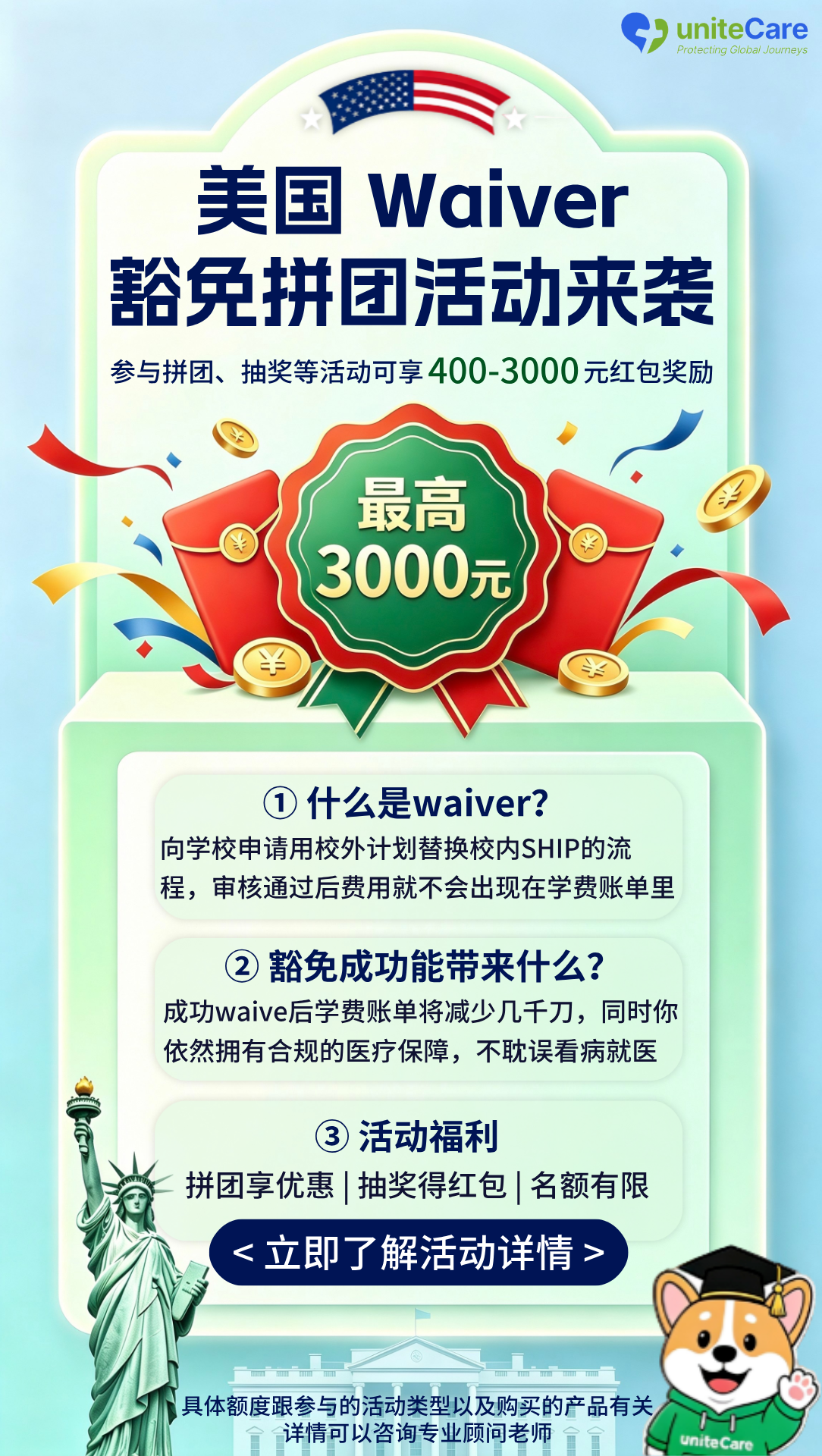
US insurance exemption campaign goes live
Join group buying and lucky draws to receive red envelope rewards of up to 3000 yuan!
*【The specific quota is subject to the type of activity participated and the products purchased, please consult a professional consultant for details】